
Dejar un mensaje
Si está interesado en nuestros productos y desea conocer más detalles, deje un mensaje aquí, le responderemos lo antes posible.

Panel de inflamación: kit HBP OEM que adopta plataformas de ensayo de quimioluminiscencia

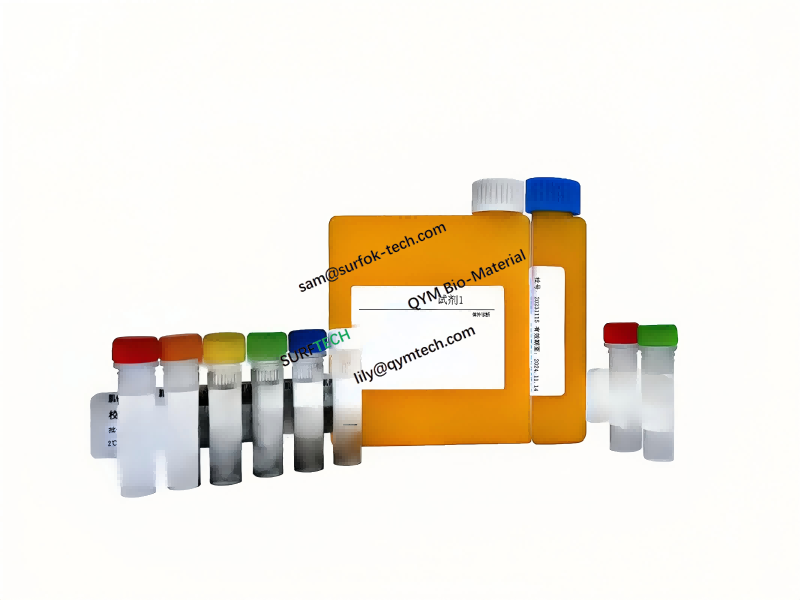
Proteína de unión a heparina (HBP)La proteína HBP, una proteína granular derivada de neutrófilos, sirve como biomarcador de diagnóstico precoz para enfermedades infecciosas, en particular infecciones bacterianas graves. Los niveles séricos/plasmáticos de HBP aumentan significativamente en las infecciones bacterianas, mientras que las infecciones no bacterianas no provocan tal elevación.
Proteína de unión a heparina (HBP) Se aplica para la identificación temprana, la estratificación del riesgo y la evaluación del pronóstico de infecciones bacterianas graves y sepsis, así como para el diagnóstico diferencial de afecciones inflamatorias agudas y fugas vasculares localizadas inducidas por infecciones.
HBP El kit OEM utiliza un inmunoensayo tipo sándwich de dos anticuerpos y es compatible con plataformas de quimioluminiscencia. Los anticuerpos monoclonales específicos se dirigen a epítopos estructurales distintos de la molécula de HBP para capturar HBP plasmática o sérica, lo que proporciona alta sensibilidad y una especificidad excepcional sin reactividad cruzada con otras proteínas de los gránulos de neutrófilos. Calibrado con antígeno HBP recombinante de alta pureza, el ensayo ofrece resultados cuantitativos precisos, fiables y estables. Al servir como biomarcador de alerta temprana para la fuga vascular aguda y la insuficiencia orgánica, facilita la intervención clínica oportuna, la clasificación de pacientes en urgencias y en unidades de cuidados intensivos (UCI), y la monitorización dinámica de la eficacia terapéutica en enfermedades infecciosas graves.
★reactivos a granel están disponibles con materias primas compatibles.
Marca :
QYM,SURFTECHArtículo n.° :
HBP-1Pedido (MOQ) :
On requestPago :
T/TOrigen del producto :
ChinaColor :
R1 should be a colorless to pale yellow transparent liquid; R2 should be a milky white suspension.Puerto de embarque :
Hefei or other portsPlazo de entrega :
On requestPeso :
On requestHBP OEM reagent
Product Specifications
| Product Name | HBP OEM reagent (chemiluminescence platforms) |
| Application: | It is applied for the early identification, risk stratification, and prognosis assessment of severe bacterial infections and sepsis, as well as the differential diagnosis of acute inflammatory conditions and localized infection-induced vascular leakage. |
| Detection Principle |
Two-antibody sandwich immunoassay |
|
Sample Type: |
Plasma (non-heparin anticoagulated plasma) |
|
Calibrator Component: |
Recombinant HBP |
|
Method |
Acridinium Ester Chemiluminescence |
|
Sample Volume |
10 μL |
|
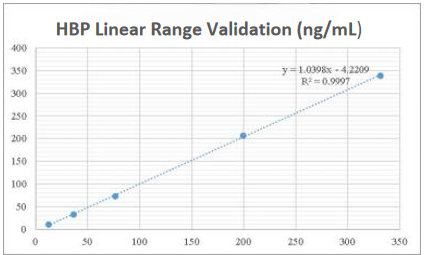
Linear Range |
2.0–200 ng/mL |
|
LOB |
0.1 ng/mL |
|
Accuracy |
Recovery 85%–115% |
|
Reference interval |
≤10 ng/mL |
|
Precision |
Intra-assay CV ≤5%; Inter-assay CV ≤10% |
|
Method comparison |
Correlation coefficient r>0.975 vs. Axsi-Shield |
|
Interferents |
Bilirubin: <20 mg/dL; Hemoglobin: <5000 mg/L;Triglycerides: <10 mmol/L; Rheumatoid Factor: <500 IU/mL |
| Hook | 2000 ng/mL |
| Package Size |
on request |
| Storage/Shipping | Store sealed and protected from light at 2 °C to 8 °C |
| Shelf Life | 12 months |
Product Advantages
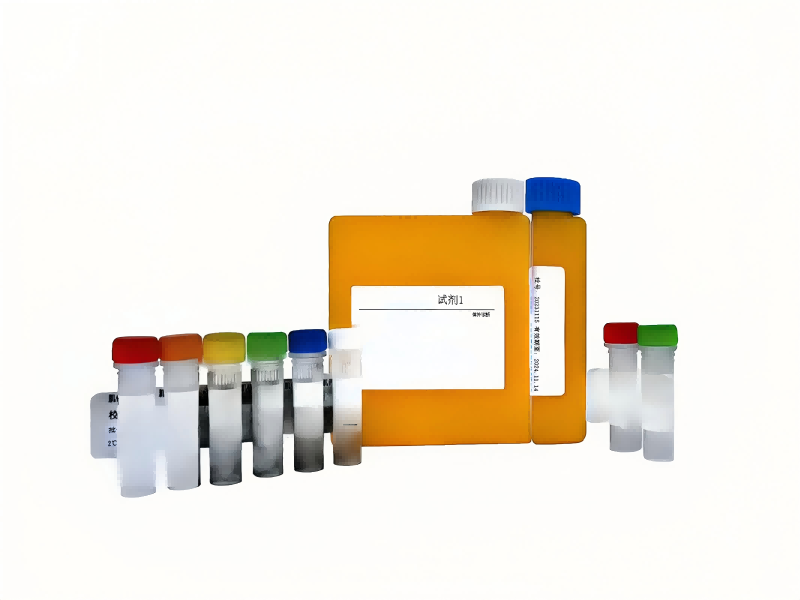
1.Higher sensitivity than mainstream reagents.
2.Excellent linearity ≤200 ng/mL.
3.Precision within 5% across all concentrations.
4.Reliable long-term stability under specified storage conditions (heat degradation test).
5.Good correlation versus Axis-Shield reagents.
Sensitivity Analysis Batch precision test
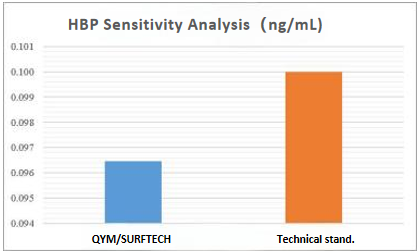
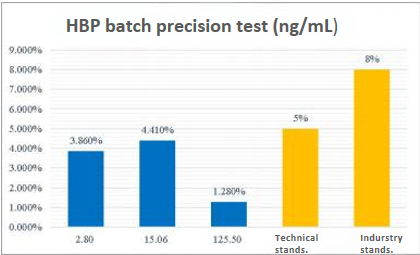
Linear Range Validation Thermal Damage Test

Application Scenarios

Heparin-Binding Protein (HBP), a neutrophil-derived granule protein, serves as an early diagnostic biomarker for infectious diseases, particularly severe bacterial infections. Serum/plasma HBP levels rise significantly in bacterial infections, whereas non-bacterial infections do not induce such an elevation.
Heparin-Binding Protein (HBP) is applied for the early identification, risk stratification, and prognosis assessment of severe bacterial infections and sepsis, as well as the differential diagnosis of acute inflammatory conditions and localized infection-induced vascular leakage.
--------------占位---------------
FAQ
Does HBP detect bacterial infection and sepsis earlier than PCT and CRP?
Yes. HBP is rapidly released from neutrophil secretory vesicles within 1–2 hours of bacterial stimulus—reaching peak levels up to 12–24 hours earlier than PCT or CRP, providing a crucial window for early sepsis detection and vascular leakage prediction.
Can the assay reliably differentiate severe bacterial infections from viral or non-infectious systemic inflammation?
Yes. HBP levels rise marked only in response to intact bacteria or bacterial cell wall components (e.g., LPS), remaining low or normal in viral infections, viral pneumonia, or aseptic inflammatory conditions.
Procalcitonina (PCT) La PCT es un biomarcador fiable para el diagnóstico de infecciones bacterianas, con alta sensibilidad y especificidad. Los niveles séricos de PCT aumentan rápidamente durante infecciones bacterianas sistémicas graves y vuelven a los niveles basales más rápido que la PCR una vez controlada la infección. Sin embargo, las infecciones localizadas no suelen provocar elevaciones significativas de la PCT. Por consiguiente, la PCT se utiliza ampliamente para el diagnóstico y el diagnóstico diferencial de la sepsis, así como para evaluar su gravedad y progresión clínica.★reactivos a granel están disponibles con materias primas compatibles.
LEER MÁS
Interleucina-6 (IL-6) La IL-6 es una citocina fundamental en las respuestas inflamatorias e inmunitarias. Promueve la producción de anticuerpos por las células B, la proliferación de células T y la expresión de IL-2, a la vez que regula el crecimiento y la diferenciación de diversos tipos celulares. Además de su papel central en la regulación inmunitaria, las respuestas de fase aguda y la hematopoyesis, la IL-6 es crucial para la defensa del huésped contra las infecciones. Las alteraciones significativas en los niveles de IL-6 se correlacionan estrechamente con la actividad de la enfermedad, la progresión tumoral, la gravedad del rechazo de trasplantes y la eficacia terapéutica. ★reactivos a granel están disponibles con materias primas compatibles.
LEER MÁS
Proteína de unión a heparina (HBP)La proteína HBP, una proteína granular derivada de neutrófilos, sirve como biomarcador de diagnóstico precoz para enfermedades infecciosas, en particular infecciones bacterianas graves. Los niveles séricos/plasmáticos de HBP aumentan significativamente en las infecciones bacterianas, mientras que las infecciones no bacterianas no provocan tal elevación.Proteína de unión a heparina (HBP) Se aplica para la identificación temprana, la estratificación del riesgo y la evaluación del pronóstico de infecciones bacterianas graves y sepsis, así como para el diagnóstico diferencial de afecciones inflamatorias agudas y fugas vasculares localizadas inducidas por infecciones.HBP El kit OEM utiliza un inmunoensayo tipo sándwich de dos anticuerpos y es compatible con plataformas de quimioluminiscencia. Los anticuerpos monoclonales específicos se dirigen a epítopos estructurales distintos de la molécula de HBP para capturar HBP plasmática o sérica, lo que proporciona alta sensibilidad y una especificidad excepcional sin reactividad cruzada con otras proteínas de los gránulos de neutrófilos. Calibrado con antígeno HBP recombinante de alta pureza, el ensayo ofrece resultados cuantitativos precisos, fiables y estables. Al servir como biomarcador de alerta temprana para la fuga vascular aguda y la insuficiencia orgánica, facilita la intervención clínica oportuna, la clasificación de pacientes en urgencias y en unidades de cuidados intensivos (UCI), y la monitorización dinámica de la eficacia terapéutica en enfermedades infecciosas graves. ★reactivos a granel están disponibles con materias primas compatibles.
LEER MÁS
Gastrina-17 (G-17) Se aplica para la detección, estratificación de riesgo y diagnóstico auxiliar de gastritis atrófica crónica, atrofia de la mucosa antral gástrica y cáncer gástrico, así como para la monitorización no invasiva del estado del ácido gástrico. Helicobacter pylori (H. pylori) infección y terapia a largo plazo con inhibidores de la bomba de protones (IBP).G17 El kit OEM utiliza un inmunoensayo tipo sándwich de dos anticuerpos y es compatible con plataformas de quimioluminiscencia. Los anticuerpos monoclonales específicos se dirigen a epítopos estructurales distintos de la molécula G-17 para capturar G-17 en suero o plasma, lo que proporciona una alta sensibilidad y una especificidad excepcional sin reactividad cruzada con otras isoformas de gastrina o colecistoquinina (CCK). Calibrado con antígeno G-17 recombinante de alta pureza, el ensayo ofrece resultados cuantitativos precisos, fiables y estables. Al servir como un biomarcador no invasivo crucial para la función secretora antral gástrica, cuando se combina con PG I, PG II y la relación PGI/PGII (PGR) en el panel de "biopsia gástrica serológica", permite la identificación precisa y específica de lesiones de la mucosa gástrica, la estratificación no invasiva del riesgo de cáncer gástrico y un manejo clínico dinámico. ★reactivos a granel están disponibles con materias primas compatibles.
LEER MÁS
Pepsinógeno I (PGI) Se aplica para la detección, la estratificación del riesgo y el diagnóstico auxiliar de la gastritis atrófica crónica y el cáncer gástrico, así como para la evaluación no invasiva de la función secretora de la mucosa gástrica y la atrofia del cuerpo gástrico.PGI El kit OEM utiliza un inmunoensayo tipo sándwich de dos anticuerpos y es compatible con plataformas de quimioluminiscencia. Los anticuerpos monoclonales específicos se dirigen a epítopos estructurales distintos en la molécula de PG I para capturar PG I sérica o plasmática, lo que proporciona alta sensibilidad y una especificidad excepcional sin reactividad cruzada con el pepsinógeno II (PG II). Calibrado con antígeno recombinante de PG I de alta pureza, el ensayo ofrece resultados cuantitativos precisos, fiables y estables. Al servir como biomarcador primario no invasivo de la capacidad secretora de ácido gástrico, cuando se combina con PG II y la relación PGI/PGII (PGR), facilita la identificación temprana de la atrofia de la mucosa gástrica, la estratificación no invasiva del riesgo de cáncer gástrico y el seguimiento terapéutico clínico. ★reactivos a granel están disponibles con materias primas compatibles.
LEER MÁS
Pepsinógeno II (PGII) Se aplica para la detección, estratificación de riesgo y diagnóstico auxiliar de gastritis atrófica crónica, enfermedades de úlcera péptica y cáncer gástrico, así como para el monitoreo dinámico de Helicobacter pylori (H. pylori) terapia de erradicación y estado de la mucosa gástrica.PGII El kit OEM utiliza un inmunoensayo tipo sándwich de dos anticuerpos y es compatible con plataformas de quimioluminiscencia. Los anticuerpos monoclonales específicos se dirigen a epítopos estructurales distintos de la molécula de PG II para capturar PG II sérica o plasmática, lo que proporciona una alta sensibilidad y una especificidad excepcional sin reactividad cruzada con el pepsinógeno I (PG I). Calibrado con antígeno recombinante de PG II de alta pureza, el ensayo ofrece resultados cuantitativos precisos, fiables y estables. Al servir como biomarcador no invasivo clave para la evaluación de la salud gástrica, cuando se combina con PG I y la relación PGI/PGII (PGR), facilita la identificación temprana de lesiones de la mucosa gástrica, la evaluación no invasiva del riesgo de cáncer gástrico y el seguimiento de la eficacia terapéutica clínica. ★reactivos a granel están disponibles con materias primas compatibles.
LEER MÁS
Dímero D Se aplica para descartar el diagnóstico de trombosis venosa profunda (TVP) y embolia pulmonar (EP), así como para el diagnóstico auxiliar, la evaluación del riesgo y la monitorización dinámica de la coagulación intravascular diseminada (CID) y los estados de hipercoagulabilidad.Dímero D El kit OEM utiliza un inmunoensayo tipo sándwich de dos anticuerpos y es compatible con plataformas de quimioluminiscencia. Los anticuerpos monoclonales específicos se dirigen a epítopos del dominio D-dímero reticulado en los productos de degradación de la fibrina para capturar el D-dímero plasmático, ofreciendo alta sensibilidad y una especificidad excepcional sin reactividad cruzada con el fibrinógeno. Calibrado con antígeno D-dímero recombinante de alta pureza, el ensayo proporciona resultados cuantitativos precisos, fiables y estables. Como biomarcador clínico crucial para los trastornos trombóticos, facilita la exclusión rápida de urgencias, la evaluación de riesgos y el seguimiento de la respuesta terapéutica en la terapia trombolítica.Como marcador clásico de trombosis, Dímero D Se utiliza ampliamente en la práctica clínica para descartar tromboembolismo venoso (TEV). También ayuda al diagnóstico y al seguimiento terapéutico de la coagulación intravascular diseminada (CID) y los tumores malignos, así como a la evaluación de los trastornos de la coagulación, lo que la convierte en una de las pruebas de coagulación más solicitadas por los médicos.★reactivos a granel están disponibles con materias primas compatibles.
LEER MÁS
Supresión de la Tumorigénesis 2 (ST2)Se aplica para la estratificación del riesgo, la evaluación de la gravedad de la enfermedad y la valoración del pronóstico de pacientes con insuficiencia cardíaca aguda y crónica, así como con fibrosis y remodelación cardíaca.ST2 El kit OEM utiliza un inmunoensayo tipo sándwich de dos anticuerpos y es compatible con plataformas de quimioluminiscencia. Los anticuerpos monoclonales específicos se dirigen a epítopos distintos de la molécula soluble ST2 para capturar la sST2 plasmática, lo que proporciona una alta sensibilidad y una especificidad excepcional. Calibrado con sST2 recombinante de alta pureza, el ensayo ofrece resultados cuantitativos precisos, fiables y estables. Al no verse afectado por la edad, el IMC ni la función renal, constituye un valioso biomarcador novedoso para la fibrosis cardíaca y la tensión biomecánica, lo que permite una predicción de riesgo personalizada y una monitorización terapéutica dinámica en el manejo de la insuficiencia cardíaca. ★reactivos a granel están disponibles con materias primas compatibles.
LEER MÁSDejar un mensaje
Escanear a WeChat :

Escanear a WhatsApp :

 English
 Español


 IPv6 RED SOPORTADA